
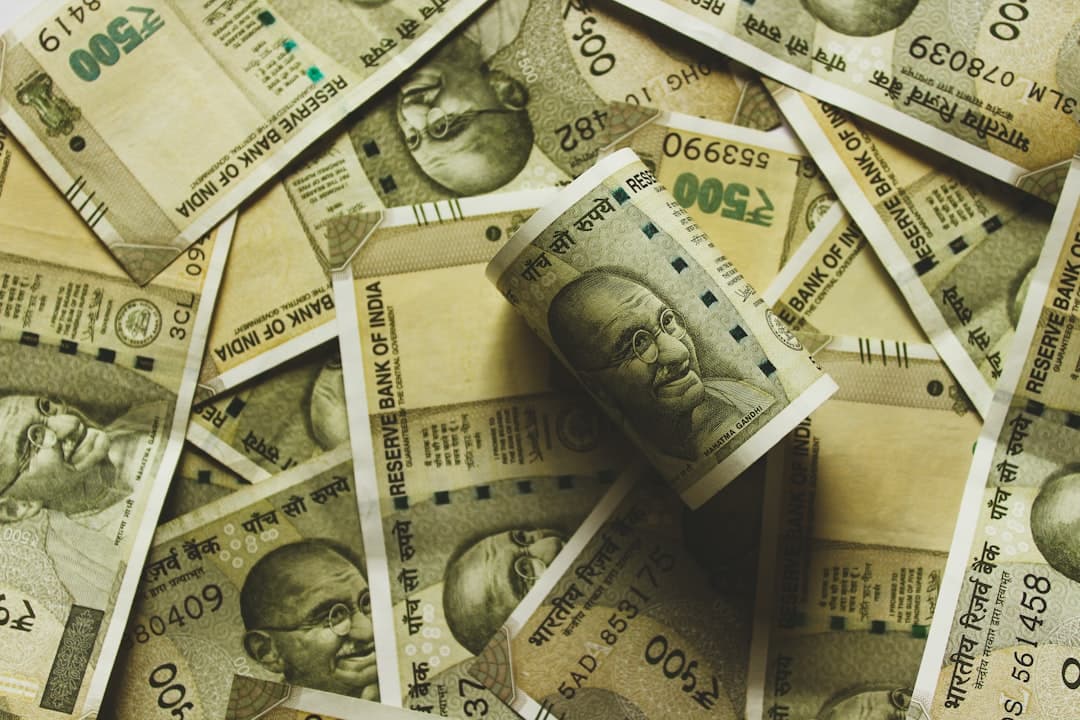
In March 2026, foreign portfolio investors pulled a net ₹28,000 crore out of Indian equity markets. That's roughly $3 billion in a single month, flowing out of Indian stocks and into safer assets elsewhere.
The rupee responded exactly as you'd expect. It fell to ₹93.4 against the US dollar — a level it hadn't touched before. If you've noticed that your imported electronics, foreign travel, or even fuel costs have been creeping up, this is part of the reason.
But here's the part that doesn't make it into most headlines: every major FPI outflow in the last 15 years has fully reversed. Every single one. The pain is real. The duration is limited. Understanding why FPIs leave — and why they come back — is the difference between panicking at the wrong time and holding through the noise.
What Are FPIs and Why Do They Matter?
Foreign Portfolio Investors are institutional investors — pension funds, sovereign wealth funds, hedge funds, and mutual funds — based outside India, who buy and sell Indian stocks, bonds, and other securities. They're registered with SEBI and trade through Indian exchanges just like domestic investors, but their money originates from outside the country.
As of early 2026, FPIs collectively owned approximately 17% of all shares listed on the NSE. That's a substantial chunk. When these investors buy aggressively, it pushes Indian stock prices up and strengthens the rupee (because they convert dollars to rupees to buy Indian assets). When they sell, the reverse happens — stock prices fall and the rupee weakens as they convert rupees back to dollars.
FPI flows don't just affect your stock portfolio. They affect the exchange rate, which affects import costs, which affects inflation, which affects RBI's interest rate decisions, which affects your home loan EMI. It's all connected. The ₹28,000 crore outflow in March isn't just a stock market story — it's an economy-wide pressure point.
Why Are FPIs Leaving India Right Now?
The answer isn't that India's economy is broken. India's GDP growth is still above 6%, corporate earnings are growing, and the domestic consumption story remains one of the strongest in the world. FPIs aren't leaving because India is failing. They're leaving because the risk-reward calculus shifted.
Oil and inflation. India imports 85%+ of its crude oil. When Brent crude crossed $110 in early April — driven by the Iran conflict and Strait of Hormuz disruption — it meant India's import bill exploded. Higher oil means higher inflation, which means RBI can't cut interest rates, which means the economic growth boost from cheaper credit isn't coming. For a foreign investor deciding between India (high inflation, no rate cuts) and US treasuries (safe, yielding 4.5%+), the choice gets easier.
The US dollar strength. When geopolitical uncertainty rises, global capital flows toward the US dollar. The Dollar Index (DXY) has risen sharply since February 2026. A stronger dollar makes emerging market assets — including Indian stocks — less attractive in dollar terms. Even if an Indian stock rises 10% in rupees, a 5% rupee depreciation means the foreign investor only made 5% in their home currency. That's barely better than a risk-free US treasury bond.
Global risk-off sentiment. It's not just India. FPIs have been pulling money out of most emerging markets — Brazil, South Korea, Taiwan, Indonesia. The Iran-US conflict created a wave of risk aversion that hits all emerging economies. India's outflow is proportional to its market size, not a specific India problem.
Where Is the Money Going?
When FPIs pull money out of Indian equities, it doesn't just vanish. It moves to assets perceived as safer or offering better risk-adjusted returns in the current environment.
US Treasury bonds have seen massive inflows globally in 2026. With 10-year US yields above 4.5% and effectively zero credit risk, they're the default safe haven. Why take emerging market equity risk when you can earn 4.5% risk-free in the world's reserve currency?
Gold is up over 12% in 2026. It's the classic crisis hedge — no counterparty risk, universally accepted, and historically rises during geopolitical conflict. Central banks globally have been adding gold reserves, and investor demand has followed.
Japanese equities have attracted flows because Japan's economy benefits from a weak yen (boosting exports) and corporate governance reforms have made Japanese companies more shareholder-friendly. Up roughly 8% year-to-date, Japan is one of the few equity markets globally that has performed well during the crisis.
The Rupee Impact
The rupee falling to ₹93.4 against the dollar isn't just a number on a screen. It has real consequences.
Imported goods cost more. Everything India imports — crude oil, electronics, gold, industrial machinery — becomes more expensive when the rupee weakens. This feeds directly into inflation, creating a vicious cycle: FPI outflows weaken the rupee, which raises inflation, which keeps RBI from cutting rates, which makes India less attractive to FPIs.
Foreign education and travel. If you're sending money abroad for a child's education or planning international travel, a rupee at ₹93 versus ₹83 (where it was a year ago) means everything costs 12% more in rupee terms. A semester that cost ₹8.3 lakh last year now costs ₹9.3 lakh.
RBI intervention. The Reserve Bank of India has been selling dollars from its foreign exchange reserves to prevent the rupee from falling too fast. India's forex reserves, which peaked above $640 billion, have been drawn down to support the currency. This is a finite resource — RBI can slow the decline but can't stop it indefinitely if FPI outflows continue.
What Does History Tell Us?
This is where the picture changes from scary to reassuring — if you have patience.
2008 Global Financial Crisis. FPIs pulled approximately ₹52,000 crore from Indian markets. The rupee weakened sharply. Markets fell over 50%. Within 18 months, FPIs were net buyers again. By 2010, FPI holdings in India were at new highs.
2013 Taper Tantrum. When the US Fed hinted at reducing bond purchases, FPIs fled emerging markets. India saw outflows of over ₹44,000 crore between June and August 2013. The rupee hit ₹68 — an all-time low at the time. Within 12 months, FPIs had returned and the rupee stabilized.
2020 COVID Crash. FPIs sold ₹61,973 crore in March 2020 alone — the worst single month of outflows in Indian history. By October 2020, they were back as net buyers. The Sensex hit all-time highs within the year.
The pattern is consistent: crisis triggers outflows, outflows create pain, pain subsides, fundamentals reassert themselves, FPIs return. India's domestic consumption base, demographic advantage, and corporate earnings growth make it one of the few large markets that consistently attracts foreign capital over the long run.
The current outflow of ₹28,000 crore in a single month is significant. But compared to the ₹62,000 crore exit in March 2020, it's roughly half the magnitude. And the 2020 exit fully reversed.
What Should You Do?
Don't panic-sell because FPIs are selling. FPIs make allocation decisions based on global models, currency hedging, and portfolio rebalancing. They're not selling because India is a bad investment. They're selling because global conditions temporarily favor safer assets. When conditions change, the same models will signal them to buy India again.
Be aware of rupee exposure. If you have upcoming dollar-denominated expenses — education, travel, imported purchases — the rupee may weaken further in the short term. If these expenses are within the next 3-6 months, consider partially hedging by buying dollars now rather than waiting.
Continue your SIPs. If FPIs are selling and markets are down, your SIP is buying the same stocks at lower prices. That's not a problem — that's rupee cost averaging working exactly as designed. The investors who paused SIPs during the 2020 crash missed the recovery. Don't repeat that mistake.
Watch for the reversal signal. FPI flows are reported daily by NSDL and tracked on most financial portals. When daily FPI flows turn consistently positive for 5-7 consecutive sessions, it typically signals the start of a flow reversal. That hasn't happened yet — but it will, as it always has.
For daily FPI flow data, rupee tracking, and global capital flow analysis, visit while25.com.