
On April 23, 1992, journalist Sucheta Dalal published a story in The Times of India that began with a single, devastating sentence.
She had found the loophole. And Harshad Mehta's empire — built on ₹4,025 crore of money that never existed — started crumbling before lunchtime.
The Sensex fell for 12 consecutive trading days after his arrest. Investors who had doubled their money in 18 months watched it disappear in two weeks. Hundreds of bank employees were suspended. The Finance Minister faced Parliament. And SEBI — which had existed for four years but done almost nothing — finally got its teeth.
This is the story every Indian investor should know before they call a market "manipulated."
The Setup: India in 1991
To understand why Mehta could do what he did, you need to understand what India looked like in 1991.
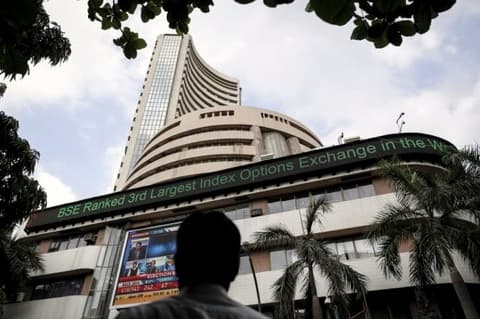
The country had just narrowly avoided a balance-of-payments crisis. The rupee had been devalued. The finance ministry was scrambling. And the BSE — the Bombay Stock Exchange — was run like a club. Brokers settled trades with each other in cash, cheques, and handshakes. Regulators had advisory power, not enforcement power.
The stock market was also booming. India had just begun liberalising its economy. Foreign institutional investors were sniffing around. Retail investors were entering equities for the first time, lured by stories of 5× returns.
Harshad Mehta, then in his mid-30s, had spent most of the 1980s working his way up from a small-time broker. He had noticed something that most people had missed.
The BR Loophole: How You Borrow Money That Doesn't Exist
Banks in India held large portfolios of government securities — bonds, treasury bills, gilts. When one bank wanted to sell bonds to another, they used a mechanism called a Bank Receipt (BR). A BR was essentially an IOU: "I owe you the securities, and I'll deliver them shortly."
The problem? BRs were almost entirely unsupervised. Banks trusted other banks. Nobody verified whether the securities backing the BRs actually existed.
Mehta saw this and built an arbitrage machine.
Here's how it worked, simplified:
- Bank A "lends" money to Mehta against a BR (an IOU for securities Bank A doesn't have)
- Mehta takes that money and buys stocks on BSE — ACC, Sterlite, Apollo Tyres, Videocon
- Stock prices rise. Mehta sells some holdings, pays Bank A back
- Repeat — but bigger each time
By 1992, he was running this across two dozen banks simultaneously. The total amount in the system: approximately ₹4,025 crore. To put that in context, the entire BSE market cap in 1991 was around ₹1.1 lakh crore. He was moving roughly 4% of that through fake IOUs.
The Rise: 280% in 18 Months
What Mehta did with that money was breathtaking in its audacity.
He concentrated it in a small basket of stocks and made them go vertical. ACC (Associated Cement Companies) went from ₹200 to ₹9,000 in under a year. Apollo Tyres. Sterlite Industries. These weren't obscure companies — they were well-known names. And when Harshad Mehta publicly said he was buying them, retail investors piled in behind him.
The Sensex went from 1,194 in January 1991 to 4,546 in April 1992 — a 280% gain in 18 months.
Mehta himself became a celebrity. He was featured in Sunday magazine. He moved into a ₹15 crore sea-facing penthouse in Worli. He drove a fleet of Lexus cars. He was called the "Big Bull" — India's own Gordon Gekko, but in a white kurta.
Every bank employee who had signed off on fake BRs looked away. Every auditor who should have flagged it didn't. The system worked because everyone assumed someone else was checking.
The Collapse: One Article
Sucheta Dalal had been tipped off.
A source inside the banking system told her that certain brokers were receiving money from banks in ways that were clearly outside the rules. She started pulling on that thread. She found Mehta's name. She found the BRs.
Her April 23, 1992 article named Harshad Mehta directly. It described the mechanism. It called it what it was.
By market close that day, the Sensex had fallen 570 points — about 12.7% — its largest single-day fall in history at the time.
Mehta was arrested. Police found ₹2.75 crore in cash in his car. Investigators found securities stuffed in the offices of Canara Bank and National Housing Bank, used as fake collateral. Dozens of bank officials were arrested alongside him.
The fallout lasted months. Twenty-seven banks were found to have been defrauded. The Finance Ministry took a political beating. And the Sensex — which had been at 4,546 — fell all the way to 2,529 by the end of 1992.
Everyone who had bought on leverage to chase the Mehta rally was wiped out.
What the Scam Actually Changed
Here's the part that most people gloss over: the Harshad Mehta scam arguably did more for Indian market infrastructure than any single regulator had managed in the previous decade.
SEBI got statutory powers. Before 1992, SEBI (established 1988) was a toothless advisory body. After the scam, Parliament passed the SEBI Act 1992, giving it real enforcement authority — the power to investigate, raid, and prosecute. Every SEBI show-cause notice and summons you hear about today traces back to that law.
Dematerialisation was introduced. The scam partly worked because physical share certificates could be forged or delayed. By 1996, India launched NSDL (National Securities Depository Limited) — the system that converts all shares into electronic form. When you see "holdings in Zerodha," you're seeing the direct result of what Mehta's fraud made necessary.
Broker norms were tightened. The BSE's cosy settlement system — where brokers settled trades amongst themselves informally — was dismantled. Clearing corporations with actual capital were required.
The BR mechanism was abolished. Banks can no longer trade government securities using informal IOUs. Repo transactions now go through RBI's Clearing Corporation of India (CCIL).
Every safeguard that protects your money when you invest in Indian stocks today has a piece of Harshad Mehta's scam in its origin story.
What He Got Wrong About Markets
Here's a question worth asking: was Mehta a visionary who got greedy, or was he always a fraudster?
The honest answer is: probably both.
He understood that Indian equities were undervalued in 1991. He was right about that. The companies he picked — ACC, Apollo Tyres — did have real businesses. The stocks were genuinely cheap. If he had invested normally, he might still have made 5× returns.
But he couldn't stop at normal returns. The BR machine was too easy to run and too profitable to slow down. And the feedback loop — higher stocks meant he could borrow more, which meant he could push stocks higher — had only one possible ending.
This pattern repeats in every market bubble. The fundamentals are real. The money flow is artificial. And the people in the middle convince themselves they're investing when they're actually inflating.
The Lesson That Actually Matters
If you're investing in Indian equities today, three things from the 1992 scam are worth keeping close:
1. Understanding who is making the market move matters. When a stock goes from ₹200 to ₹9,000 in 12 months, ask who is buying and why. Mehta's rally was real price movement — for a while. The fact that it was artificial only became obvious after it ended.
2. Regulatory failures happen in information gaps. The BRs worked because multiple institutions each thought someone else was verifying. In modern markets, the equivalent is complex financial products that everyone uses but few fully understand.
3. The clean-up is often worth more than the crisis cost. Indian markets are far safer, more transparent, and better regulated today because of what went wrong in 1992. Every crisis that forces structural reform ultimately serves long-term investors.
Harshad Mehta died in 2001, still facing hundreds of criminal cases, never fully convicted. The Sensex he briefly pushed to 4,546 now trades above 73,000.
The market has a very long memory — and occasionally a very useful one.