
Most retail traders in India check Nifty levels, sector charts, and maybe a few technical indicators before placing a trade. Very few check India VIX.
That's a mistake.
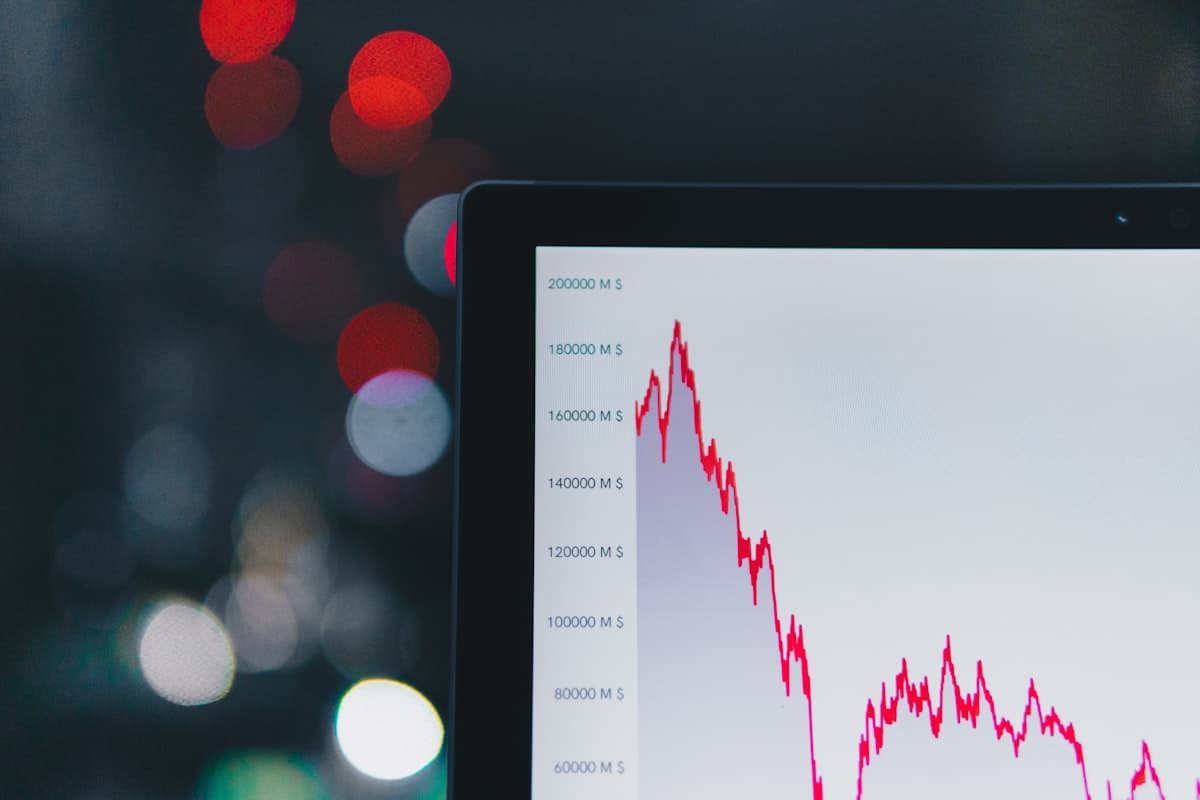
India VIX fell approximately 7% on April 10, 2026 — a significant single-session move that preceded a 275-point Nifty rally. The two are not coincidental. They tell the same story: fear is fading, and when fear fades, markets move more predictably in the direction of the prevailing trend.
Understanding India VIX won't make you a better stock-picker. But it will help you avoid sizing into volatile positions during dangerous environments, and help you recognise when market conditions have turned in your favour.
What India VIX Is
India VIX — Volatility Index — is a real-time measure of the market's expectation of volatility over the next 30 days. It is computed by the National Stock Exchange using the prices of near and next month Nifty 50 options contracts.
The intuition behind it is this: when traders are scared, they pay more for downside protection. Nifty put options become expensive when investors scramble to hedge their portfolios against potential crashes. The higher the demand for these options, the more expensive the premiums, and the higher India VIX goes.
VIX is not a directional indicator. It doesn't tell you whether the market will go up or down. It tells you how much it is expected to move. High VIX means large swings are anticipated. Low VIX means calmer markets are expected.
Think of it as a forecast for turbulence, not a weather vane.
How VIX Is Actually Calculated
NSE computes India VIX using the Black-Scholes options pricing model inputs, specifically by looking at the implied volatility embedded in current Nifty options prices across multiple strike prices.
The formula essentially asks: at current options prices, what level of daily price movement does the market think is likely over the next 30 calendar days? That figure, annualised, becomes the VIX reading.
A VIX of 17 means the options market implies an annualised volatility of 17% for Nifty — which translates to an expected daily move of roughly ±1.07% (calculated as 17% / √252). A VIX of 35 implies expected daily moves of roughly ±2.2%.
You don't need to remember the formula. What matters is the relationship: high VIX = high expected daily moves = high uncertainty = markets difficult to trade directionally.
Reading VIX Levels
VIX levels don't have fixed thresholds that apply universally, but Indian markets have developed some practical reference ranges over time.
Below 12–13: Unusual calm. Sometimes precedes a volatility event. Options premiums are cheap — useful for buying protection at low cost.
13–20: Normal volatility range. Most trending market conditions live here. Directional strategies work reasonably well.
20–25: Elevated anxiety. Often accompanied by sharp intraday swings. Stop-losses get triggered more frequently.
25–35: High stress. Market is in or near a fear-driven sell-off. Risk management takes priority over opportunity-seeking.
Above 35: Crisis mode. During the COVID crash in March 2020, India VIX reached 83.64 — its all-time high. At those levels, even experienced traders reduce exposure dramatically.
These ranges are guidelines, not rules. The direction of VIX movement often matters more than the absolute level. A VIX falling from 28 to 22 can be more bullish than a VIX rising from 16 to 20, because falling VIX signals that fear is receding and calm is returning.
What April 10, 2026 Looked Like
India VIX entered the week at elevated levels. Concerns about the Iran-US conflict and broader geopolitical uncertainty had pushed market anxiety higher since the previous week. Options premiums were inflated. Intraday swings were wide.
On April 8, when the US-Iran ceasefire was announced, global risk sentiment shifted immediately. Indian equities rallied nearly 3.8% in a single session. VIX started falling.
By April 10, VIX had dropped roughly 7% in a single session, settling around 17. This level — not excessively low, but clearly in the normal zone — told traders that the acute fear phase was over. The market was no longer pricing in the possibility of a crisis.
Nifty responded with a 275-point rally. Auto stocks gained 2.8%. Banking stocks rose 2%. Investors who had been sitting on the sidelines during the high-VIX days began re-entering positions.
This is the pattern worth watching. When VIX drops sharply after an elevated period, it often signals that the conditions for a sustained rally are forming. The turbulence tax on options premiums disappears. Momentum can build without being constantly interrupted by stop-loss hunting.
Practical Uses for Traders
Before placing any intraday trade, check India VIX. If VIX is above 20, consider narrowing your position size. Wider expected moves mean your standard stop-loss distances will be hit more frequently, not because your analysis is wrong, but because the market is simply more volatile.
For options sellers (premium writers), high VIX is actually an opportunity — premiums are elevated, so selling covered positions generates more income per contract. But the risk is also higher. A high-VIX environment can produce gap moves that blow through your short position unexpectedly.
For options buyers, low VIX means cheaper premiums. If you have a directional view and VIX is in the 12–15 range, the cost of buying puts or calls is lower — improving your risk-reward.
For positional equity traders, watch for VIX divergences from the market. If Nifty is rallying but VIX is not falling, the rally may be fragile — smart money is still buying protection even as prices rise. If Nifty is falling but VIX is falling too, the sell-off is likely orderly and technical rather than panic-driven.
Why Most Retail Traders Ignore VIX
India VIX is not available on most basic trading apps. It doesn't appear on Zerodha Kite's default dashboard. It requires either knowing where to find it (NSE website, TradingView, Bloomberg) or specifically adding it as a watchlist item.
The result is that retail traders are making position-sizing decisions without knowing what the market thinks about its own volatility. They size the same way whether VIX is 14 or 38. This is the equivalent of planning a road trip without checking whether a storm is coming.
Institutional desks, algo traders, and experienced option writers check VIX before every session. It is as fundamental to their pre-market routine as checking global cues and FII/DII data.
Adding VIX to Your Routine
The simplest change you can make is to add India VIX (NSE: INDIAVIX) to your pre-market checklist. Before the market opens, note:
- Is VIX above or below 20?
- Is VIX rising or falling over the last 3 sessions?
- Does the VIX direction confirm or contradict the Nifty direction?
If VIX is high and rising — tighten stops, reduce size, avoid chasing momentum. If VIX is falling sharply — conditions are improving for directional strategies.
Today's 7% VIX drop alongside Nifty's 1.16% gain is a textbook example of the signal worth watching. The fear gauge and the index moved in opposite directions — and that divergence, in this context, was bullish.
India VIX data referenced from NSE India. April 10, 2026 market data sourced from ET Now and ICICIdirect.