
Indian stock market history is not just a list of old dates.
It explains why today's market is built the way it is.
Why do we have demat accounts? Why is SEBI so strict about surveillance and risk? Why did NSE change the way trading works? Why are regulators so worried about retail F&O losses?
A lot of those answers live in the past.
1875: Before there was a building, there was a banyan tree
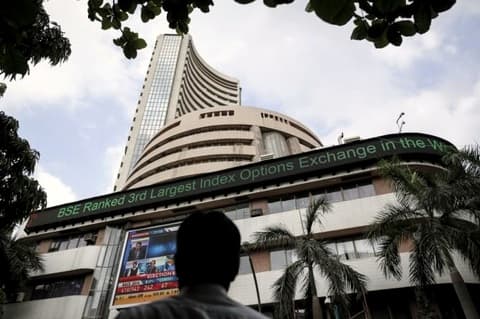
The Bombay Stock Exchange did not begin in a glass tower.
It began with brokers informally meeting under a banyan tree in Bombay.
In the late 1800s, trade in shares of banks, cotton mills, and shipping companies started becoming more active. Over time, the informal group became organised.
In 1875, that group formally became the Native Share & Stock Brokers Association. That later evolved into what we now know as the BSE.
This matters for one simple reason: India did not "recently" discover markets. Organised equity trading here is much older than most people assume.
For decades, the market was physical, slow, and club-like
For a long time, stock trading in India was a very different experience.
- orders were shouted in trading rings
- share ownership often meant physical paper certificates
- access was limited
- pricing and allocation were not nearly as transparent as modern investors expect
The market existed, but it was not designed for speed, openness, or mass participation.
That is why older reforms feel boring on the surface but matter a lot. They changed the market from a closed network into public infrastructure.
1956: The first serious rulebook
The Securities Contracts (Regulation) Act, 1956 gave India a more formal legal framework for securities trading.
It did a few important things:
- recognised exchanges formally
- defined securities contracts more clearly
- gave the government oversight powers
- created a proper base for listing rules
In plain English: the market was no longer just a place where brokers met. It became something the state would regulate more seriously.
The 1970s and 1980s: A market with friction everywhere
Before the 1990s reforms, the Indian market had a lot of structural friction.
Physical share certificates created delays. Pricing for new issues was more controlled. The ecosystem was less transparent. Retail access was limited compared to today.
You could still invest. But the system was slower, narrower, and more political than market-led.
That is one reason the liberalisation era changed capital markets so dramatically. It did not just increase activity. It changed the design of the market itself.
1991: Liberalisation changes the game
The 1991 balance of payments crisis forced India into deep economic reform.
That wider economic opening changed capital markets too.
A few shifts were especially important:
- companies got more freedom in pricing issues
- foreign investors were allowed in more meaningfully
- the old system of heavy control started giving way to a more market-driven model
- SEBI's role became much more important
This was the start of modern Indian capital markets.
It did not make markets safer overnight. But it did make them bigger, faster, and more important to the economy.
1992: The Harshad Mehta scam forces the system to grow up
Then came one of the biggest shocks in Indian financial history.
Harshad Mehta used weaknesses in the banking and settlement system to move huge amounts of money into selected stocks. Prices exploded. Retail investors rushed in. The story felt unstoppable.
Then it broke.
When the scam was exposed, confidence collapsed and the market fell hard.
What matters most is not just the scandal itself. It is what came after it.
The scam pushed India toward:
- stronger regulation
- better settlement systems
- more professional market infrastructure
- a stronger and more empowered SEBI
A lot of today's market discipline exists because the old system was shown to be too easy to exploit.
1994: NSE arrives and changes behaviour, not just competition
When the National Stock Exchange (NSE) was launched in 1994, it was not just "one more exchange."
It changed how trading was done.
NSE pushed a model built around:
- electronic trading
- better nationwide access
- more transparency
- less dependence on physical trading floors
This was a huge shift.
The old market structure rewarded proximity, relationships, and floor access. Electronic trading rewarded speed, systems, and transparency.
BSE had to respond. That competition accelerated modernisation across the market.
This is one of the most important turning points in Indian market history.
1996 onward: Demat removes a giant operational headache
If you started investing after the 2000s, it is easy to underestimate how big dematerialisation was.
Before demat, investors dealt with paper certificates. Those certificates could be delayed, damaged, lost, rejected, or forged.
The Depositories Act, 1996 helped change that. Over time, electronic holding became the norm through institutions like NSDL and CDSL.
That one change removed enormous friction from the system.
It made investing cleaner, transfers easier, and large-scale retail participation much more realistic.
Without demat, the current retail market boom would have been much harder to imagine.
2000-2001: The market learns the lesson again
The early 2000s brought another painful reminder.
India was hit by the global dotcom unwind, and at the same time the Ketan Parekh episode showed that concentrated manipulation and weak financing structures could still do damage.
Markets fell sharply. Confidence was hit again.
As before, the lesson was expensive but useful.
Risk controls, surveillance, margin systems, and market oversight kept getting stronger because the system had already seen what happens when gaps are ignored.
2008: India is not isolated from the world
During the global financial crisis, Indian banks were not at the centre of the mortgage disaster the way some Western institutions were.
But Indian markets still suffered badly.
The reason was not that the Indian system was identical to the US. The reason was that global capital is connected. When foreign investors de-risk, emerging markets feel it. When panic spreads, correlation rises.
This period taught a useful lesson: India can be structurally stronger than peers and still get hit hard when the world turns risk-off.
That is still true today.
2010s: The market becomes more formal, digital, and regulated
The 2010s were less dramatic than the scam years, but they were just as important.
This was the decade of deeper infrastructure.
SEBI's powers increased. Market processes got tighter. More digital access came in. Corporate governance conversations got louder. The investing ecosystem became easier for ordinary people to access.
By the end of the decade, India had a much stronger base for mass participation than it had in the 1990s.
2020: A crash, then a flood of new retail investors
COVID created one of the sharpest market falls in modern history.
Then something equally important happened: retail participation exploded.
Cheap broking, smartphones, UPI, social media finance content, and more comfort with digital products brought millions of new people into the market.
This changed the culture of Indian markets.
Investing and trading stopped feeling like a niche activity done by a small urban financial class. It became mainstream.
That brought energy and liquidity.
It also brought new risks: underprepared traders, F&O speculation, copy-trading behaviour, and a lot of confidence without enough education.
2024-2025: The F&O debate becomes impossible to ignore
By this point, index options and short-term derivatives activity had become a major policy concern.
SEBI's own studies highlighted how many individual traders were losing money in the F&O segment.
That led to tighter conversations around:
- contract design
- margin rules
- speculation intensity
- investor protection
This is where history loops back on itself.
Whenever the market expands faster than investor understanding, the regulator steps in. That has happened before. It is happening again.
Where Indian markets stand now
Here is the easiest way to think about today's market.
- BSE remains the oldest exchange in Asia and still matters deeply for listings and market history.
- NSE became the dominant force in day-to-day trading activity and changed market structure permanently.
- Demat and digital broking turned market access into a mass product.
- SEBI became central because every major scam or excess pushed the system toward stricter supervision.
- Retail participation is now huge, which makes education more important than ever.
You do not need to memorise every date.
But you should remember the pattern: fraud, friction, reform, technology, access.
That pattern built the Indian market we use today.
Why this history matters to traders now
If you trade or invest today, this history helps you understand a few things more clearly.
Why regulation feels strict
Because weak systems were exploited in the past.
Why electronic execution matters so much
Because the old floor-based world was slower and less transparent.
Why demat was such a big deal
Because paper markets do not scale cleanly.
Why retail education matters now
Because access has grown faster than judgment.
That last point may be the most important of all.
India built an enormous market machine.
The next challenge is making sure more people use it with discipline rather than excitement alone.
while25 is building a platform that helps Indian traders test ideas, understand execution, and trade with more structure. Get early access.