
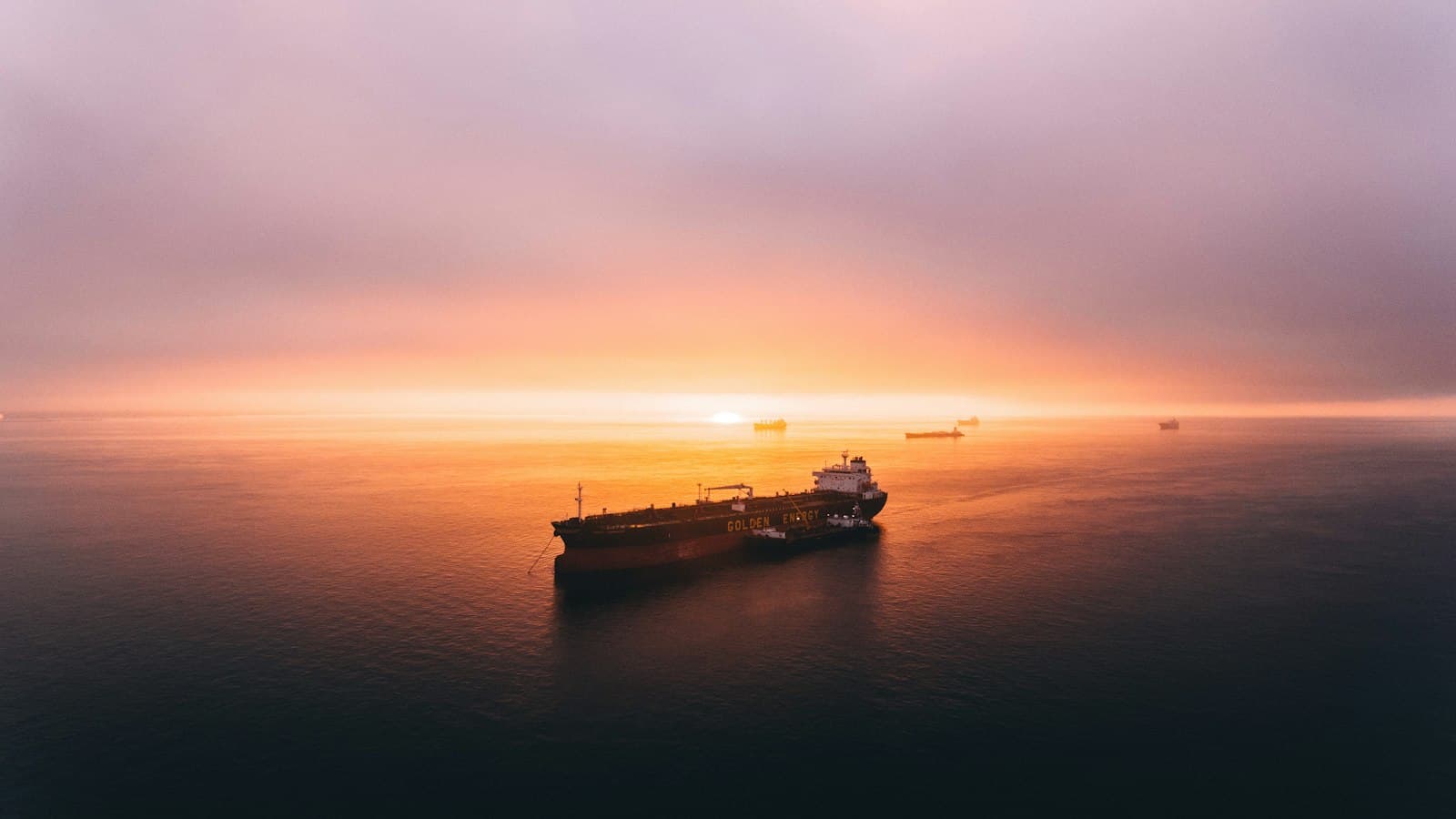
US crude oil fell 3.94% on November 2 and ended the trading day at $100.02 a barrel. Crude oil is oil in its raw form, before refining. Traders, the people who buy and sell oil on markets, were weighing a new Iranian plan. Under the plan, Iran would reopen the Strait of Hormuz within two days. The strait is a narrow sea lane at the mouth of the Persian Gulf. Tankers carry Gulf oil through it to the rest of the world.
Iran's foreign minister, Abbas Araghchi, set out the plan. Under it, each side acts in a fixed order. Americans vote in the US midterm elections on November 3. This is the national vote held halfway through a president's term. President Trump has said he would not order new strikes on Iran before that date.
The plan as stated
Araghchi said Iran agreed to cut its original seven-day proposal to two days. He called it a confidence-building proposal. In such a plan, each side takes a short set of steps to show good faith before any wider deal.
Under the two-day version, the United States takes the first step. On day one, Washington would carry out "relevant measures," including sanctions relief. Sanctions are penalties one country places on another, such as limits on trade and banking. Sanctions relief means easing those penalties. On day two, Iran would reopen the Strait of Hormuz.
The side that acts first carries the risk. It gives something up before it sees the other side deliver. In this plan, the US would ease penalties and wait a day for the strait to open. Iran would delay its step until the US finishes its own.
A seven-day timetable would have spread those steps across a week. The two-day version leaves one handover point between the sides.
The conditions Araghchi listed
On October 31, Araghchi named Iran's conditions in two statements. "Our conditions include lifting the sanctions imposed following the Islamabad memorandum and reducing US forces in the region," he said. He added: "We demand the restoration of oil waivers and the release of all our frozen funds, including those held in Qatar."
The first two conditions deal with pressure on Iran. If the US lifted the sanctions that followed the Islamabad memorandum, it would remove the layer of penalties tied to that document. If the US cut its forces in the region, it would have a smaller military presence near Iran's coast.
The other two deal with money. Oil waivers are exemptions that let certain buyers purchase Iranian oil without facing US penalties. If the US restored them, Iran would regain a legal path to sell crude. Frozen funds are Iranian money in foreign banks that Iran cannot spend. Araghchi named Qatar as one country holding such funds.
Araghchi limited direct contact. "We see no need to meet with the Americans at this stage," he said. An Iranian delegation was in Qatar for talks the same day. At this stage, Tehran and Washington exchange messages through that channel.
The strait today
Iran would be reopening a waterway where traffic is close to a standstill. Trackers recorded two transits through Hormuz on October 25. A transit is one ship passing through the strait. Before the crisis, the normal level, or baseline, was about 85 a day.
 Bar chart comparing two Hormuz transits on October 25 with a pre-crisis baseline of about 85 a day
Ships faced high danger in the days before traders heard about the plan. At least four tankers suffered strikes in the Hormuz area on October 30 and October 31, according to reports. Those reports came out in the same days that Araghchi listed his conditions.
On day two, an Iranian announcement would open the route on paper. After that, shipowners and their insurers would choose when to send vessels into these waters. Insurers are firms that pay out if a ship is damaged or lost. Tankers took hits here on October 30 and October 31. Ship trackers will record whether ships return.
The US position, by date
Reports on November 1 described Iran as waiting for a US answer to the two-day plan.
On October 31, Secretary of State Marco Rubio said Trump had not decided whether to resume military action.
The same day, Trump spoke to reporters at Mar-a-Lago, his club in Florida. He said the talks were "going fine." He added: "We're not in that much of a hurry."
Trump has said he would not attack before November 3, the midterm date. Officials say Trump will see strike options after the votes. Strike options are plans for possible military attacks.
The two sides are working to different clocks. Iran's two-day sequence starts once the US acts. Trump treats November 3 as the date before which strikes are off the table. Neither side has said in public how the two timelines fit together.
Oil prices on November 2
Oil prices fell as traders in Asia began the day on November 2. Brent crude is the international benchmark, a standard price that other oil prices are measured against. By 0407 GMT, Brent had dropped $3.68, or 3.2%, to $109.75 a barrel. West Texas Intermediate, or WTI, is the main US benchmark. At that time, WTI stood at $100.69, down $3.43, or 3.3%.
Traders kept selling through the day. WTI ended the trading day at $100.02, down 3.94%.
 Day change on November 2 for WTI crude, gold, the US dollar index and the STOXX 600
Prices in other markets moved by smaller amounts. Gold rose 0.38%. The US dollar index fell 0.33%. An index is a single number that tracks a group of prices. This one measures the dollar against a set of major currencies. The STOXX 600, a broad index of European shares, ended the day down 0.07%. A share is a small slice of ownership in a company.
Traders moved oil by a wider margin than anything else. By that measure, they see the main risk in crude supply. A closure of the strait cuts crude supply before anything else. Shares, currencies and gold feel it through second-round effects, such as fuel costs and inflation. These are knock-on effects that arrive after the first shock. Inflation is the pace at which prices rise across the economy.
Traders sold crude on a statement from one side. Iran had made a proposal and was waiting on a reply. Ship trackers showed a strait close to shut.
The plan and your portfolio
Petrol prices and inflation figures both follow the price of oil, which sits near $100 a barrel. Central banks, the institutions that set interest rates, watch those inflation figures.
Traders moved the price on words, before a single extra ship sailed. They knocked 3.94% off US crude in one trading day. Their trigger was a proposal about which side takes the first step.
This matters in two directions for people who hold energy shares, airline shares or broad index funds. An index fund buys the shares that make up an index. If the plan stalls, traders can reverse the drop. If ships return, the lower prices can last. You cannot read from the price chart which of these outcomes is coming.
Watch three sources for three kinds of signal. In their statements, Araghchi, Rubio and Trump say what each side will do. Reporters cover events on the water, such as the struck tankers. Ship trackers count transits to see whether the strait is open.
The next markers sit on the calendar. Americans vote in the midterms on November 3. Trump has said he would not strike before then. Officials say he will see strike options after the votes. If the US replies in public to the two-day plan, that reply would mark the first step in the sequence Araghchi described.
Sources
Not investment advice.