
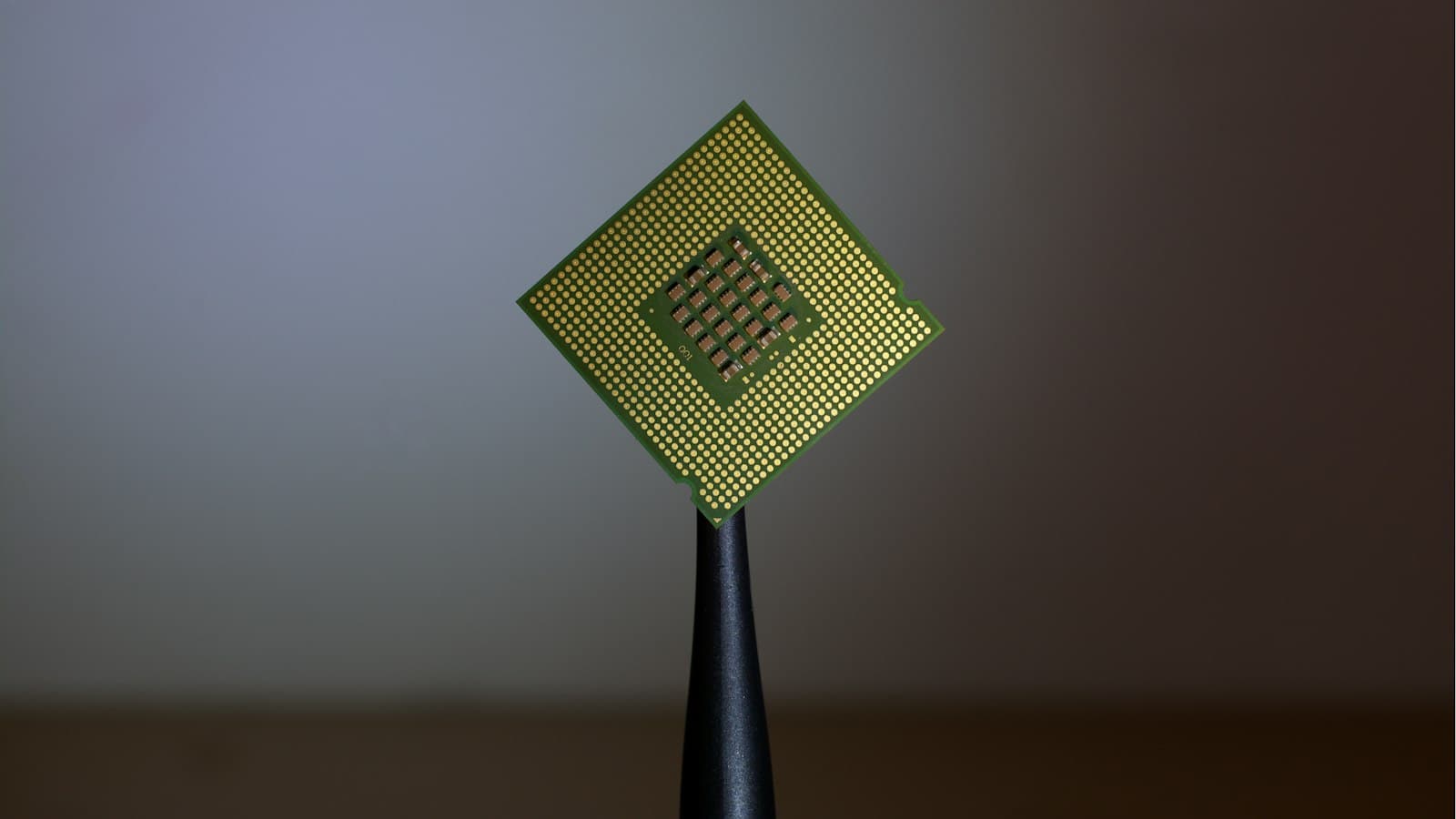
Kioxia Holdings is a Japanese company that makes memory chips. On November 2, investors in Tokyo sold its shares, and the price fell 15.8%. A share is a small slice of ownership in a company. The selling followed a profit forecast from Kioxia that came in below analysts' expectations. The share price reached its lowest level since May. Kioxia expects to earn a large sum this quarter. That did not stop shareholders from selling.
Asian markets split on the day. The Nikkei 225 is Japan's main stock index, a single number that tracks the share prices of a group of large Japanese companies. It ended down 0.33% at 63,081.86, and sellers of Kioxia shares helped pull it lower. In Seoul, investors bought SK hynix, a Korean memory chipmaker, and its shares rose 3.8%. Korea's main index, the KOSPI, gained 2.24% to 5,859.08. The gap between these moves traces back to one forecast and the expectations around it.
The forecast
Kioxia makes NAND flash. This memory chip stores photos and apps in phones, laptops and data-center drives. It keeps data after the power goes off.
Kioxia forecast operating profit of 2 trillion yen for the quarter ending in December. That is about $12.7 billion. Operating profit is the money a company keeps from its main business. It equals sales minus the costs of making products and running the company. The figure comes before interest and taxes.
The new forecast sits close to the 1.99 trillion yen Kioxia earned in the quarter that ended in September. Kioxia expects profit to hold steady.
Analysts had expected 2.35 trillion yen. Analysts are people at banks and research firms who study a company and publish estimates of its results. The average of their estimates is called the analyst consensus. Investors treat it as a shared guess. Before a company reports, buyers and sellers tend to set the share price around that guess.
 Bar chart showing Kioxia's September-quarter operating profit of 1.99 trillion yen, its December-quarter forecast of 2 trillion yen, and the analyst consensus of 2.35 trillion yen
A big profit and a falling stock
A share price is a bet on future profit. Buyers pay today for the cash they expect a company to earn in later quarters and years. If they expect profit to grow, they pay more today.
Before November 2, analysts expected clear growth from the September quarter to the December quarter. Investors who bought at recent prices had paid for that growth. In its new forecast, Kioxia said profit would stay about level.
Kioxia's profit remains large. Shareholders lost money because the growth dropped out of the forecast. Kioxia guided to 2 trillion yen, against expectations of 2.35 trillion yen. To guide means to give guidance, the forecast a company makes for its own coming results. With that guidance, Kioxia signaled a flatter path for its earnings than buyers had assumed. Sellers lowered the price to fit the flatter path. The shares fell 15.8% in one session, meaning one trading day.
Guidance carries weight for this reason. Reported results describe a quarter that has ended. Guidance describes the next one, and investors base the share price on the next one.
Full factories, slower prices
Yoshihiko Kawamura is Kioxia's chief financial officer, or CFO, the executive in charge of its money. He gave investors a reason for confidence about demand. He said next year's production capacity is "fully booked." Production capacity is the largest number of chips Kioxia's factories can make. Booked means customers have claimed that output. He added that Kioxia has allocated over half of its 2028 capacity. He said talks are ongoing on contracts that reach into 2029.
Those comments point to strong demand. A booked factory sets a limit, too. Kioxia has promised its output, so it has little room to sell many more chips in the near term. For growth, it depends on price.
Management warned that the upside momentum in NAND flash contract prices is slowing. Upside momentum is the speed at which prices rise. Contract prices are the prices large buyers, such as phone makers and cloud companies, agree to pay under supply deals. The warning concerned the pace of increases. Prices can keep climbing at a slower pace than before.
Put the two statements together and the flat forecast follows. Kioxia can sell what it makes. Its booked capacity limits how much more it can make in the near term. Each chip gains value at a slower rate. Volume, the number of chips sold, sits near its ceiling. With price gains easing on top of that, profit levels off.
This mix matters for a memory maker. Memory chips are close to a commodity, a product that buyers can get from several suppliers. Their prices swing with supply and demand. A memory maker's profit can jump when prices climb. It can stall when price gains cool, even while its factories run full.
SK hynix moved the other way
Investors bought SK hynix on November 2, and its shares rose 3.8%. Samsung Electronics shares added 1.8%. Both companies make memory chips, as Kioxia does. Their shares climbed on the same day Kioxia's fell.
Kioxia's warning covered its own outlook and NAND contract prices. It did not include a forecast for the Korean companies. Korean stocks came into the day on a rebound, a recovery after earlier losses. The KOSPI had gained 7.12% over the past five sessions. Over the past month, it remained down 16.34%.
The week began after a hard Friday in New York. On October 30, the Nasdaq Composite fell 2.86% to 25,437. The Nasdaq Composite is a US stock index heavy in technology companies. October 30 was its worst single day since June. A selloff is a stretch of heavy selling. On November 2, investors in Asia's memory-chip makers took different paths out of that selloff.
Tokyo had a softer day. SoftBank Group, an investor in OpenAI, saw its shares drop 1.6%. The Nikkei 225 is down 7.65% over the past month. Stock indexes in Shanghai and Hong Kong rose on November 2.
 Horizontal bars showing day changes for the KOSPI, Nikkei 225, Hang Seng and Shanghai Composite on November 2
Reading a forecast
Investors can learn from Kioxia's day. A company can book its factories for next year and lose 15.8% of its market value in a session. Market value is the total price of all of a company's shares. On November 2, investors priced the gap between Kioxia's forecast and their own expectations. The size of the profit mattered less.
An earnings day is the day a company reports its results. Three numbers decide it. The first is the profit the company earned last quarter. The second is the profit it forecasts for the next quarter. The third is the analyst consensus for that next quarter. For Kioxia, those were 1.99 trillion yen, 2 trillion yen and 2.35 trillion yen. Investors reacted to the distance between the second and third numbers.
Comments from management add a second layer. Kioxia's CFO spoke about volume, and the volume picture looked full. In its warning, the company spoke about price, and price momentum looked weaker. For a memory chipmaker, profit depends on both.
This applies to funds as well. An index fund buys the stocks in an index, such as the Nikkei 225. A semiconductor fund buys the stocks of chipmakers. Investors who hold Japanese or Korean index funds, or semiconductor funds, own memory makers alongside other companies. On November 2, those holdings pulled in opposite directions. In Japan, investors sold one company on its guidance and weighed on the market. In Korea, buyers lifted its peers, the companies in the same industry.
Chip and tech stocks face two scheduled tests next. Apple reports results on November 2 after the US close, the end of the US trading day. AMD, a US chipmaker, reports third-quarter results on November 3. Each company will set its forecast beside an analyst consensus. Readers who know which number the price rests on can make sense of the move that follows.
Sources
Not investment advice.