
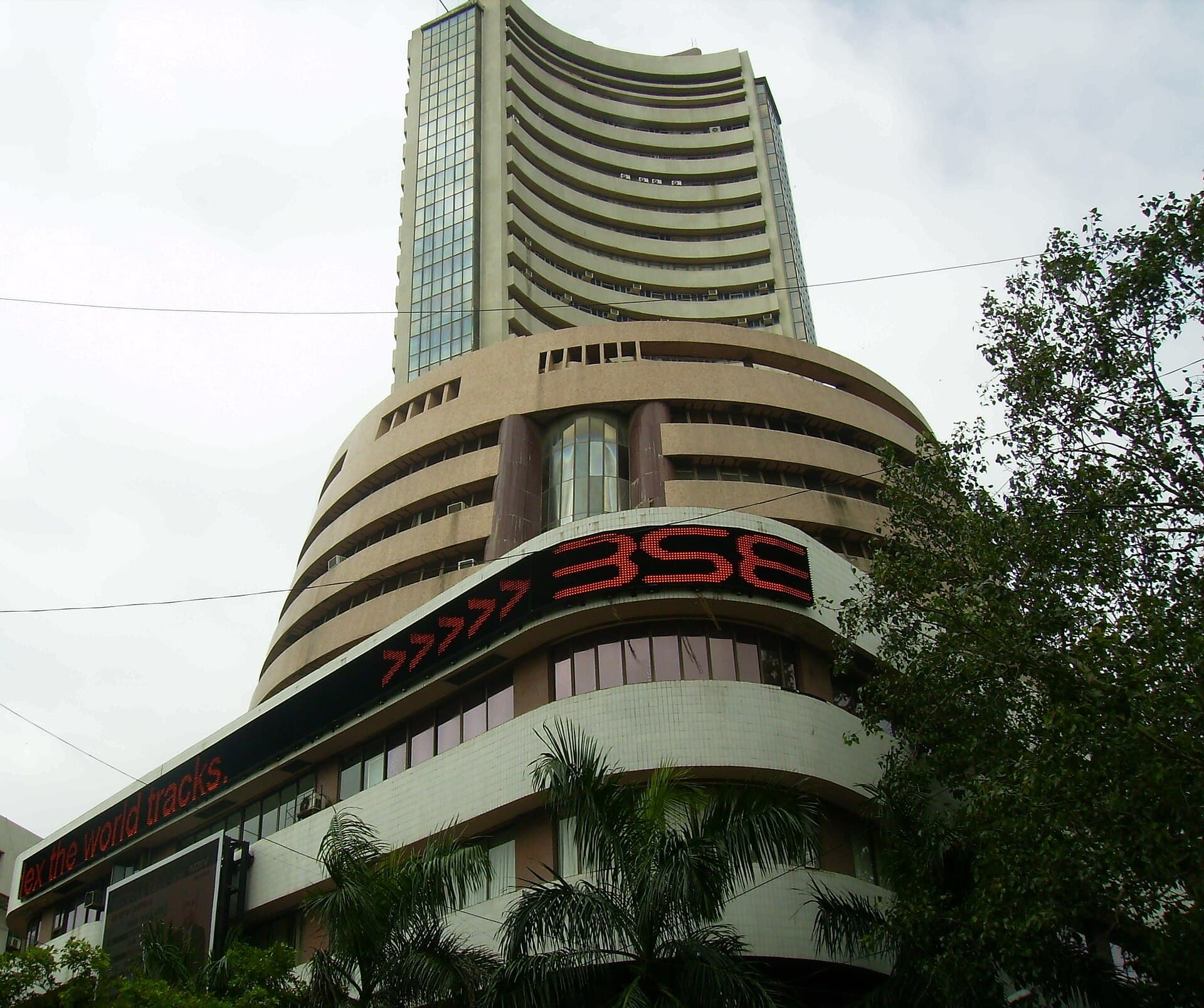
Open two terminals side by side — one showing NSE, one showing BSE — during any volatile session and you'll see something that shouldn't logically exist. The same share of Reliance Industries, the same company, the same underlying asset, trading at two different prices at the exact same second. The difference might be ₹0.50 on a quiet afternoon or ₹2 during budget day chaos. It looks like free money sitting on the table. It isn't. At least not for you.
Two Separate Exchanges, Two Separate Orderbooks
NSE and BSE are not connected pipes feeding into one common pool of orders. They are entirely independent exchanges, each running their own matching engine, their own clearing mechanism, and their own set of market makers and liquidity providers.
When you place a buy order on NSE, it goes into NSE's order book. That order has no visibility on BSE's system. So if a large seller dumps 5 lakh shares on NSE at 2:17 PM, the price on NSE drops immediately. BSE, with its own separate set of buyers and sellers, has no obligation to reprice instantly. It adjusts only when its own participants react.
This is the fundamental reason prices diverge. The two exchanges are not mirrors of each other. They are independent markets that happen to list the same securities.
The Reliance Example — And Why It Gets Fixed So Fast
Take Reliance Industries on a volatile trading day — say the day they announce a major deal or when crude oil swings sharply. During such minutes, Reliance can show a ₹0.50 to ₹2 difference between NSE and BSE. NSE might show ₹2,847 while BSE shows ₹2,845.
Arbitrageurs — mostly algorithmic trading desks sitting in Mumbai co-location servers — spot this in microseconds. They buy on BSE at ₹2,845 and sell on NSE at ₹2,847, pocketing ₹2 per share before you've even read this sentence. That buying pressure pushes BSE's price up, and selling pressure pulls NSE's price down. Within milliseconds, the gap closes.
This works precisely because Reliance is liquid on both exchanges. Millions of shares trade every day on both NSE and BSE. The arbitrageur can execute large quantities without moving the price too much in the process.
Where Retail Traders Actually Get Hurt — Mid-Cap Gaps
Reliance corrects in milliseconds. That's the well-oiled part of the system.
The problem is elsewhere. Move to smaller mid-caps — stocks with daily volumes of ₹5–₹20 crore — and the story changes completely. These stocks can show a ₹3 to ₹10 price difference between NSE and BSE that persists not for milliseconds but for hours. Sometimes the entire trading session.
Why? Because there isn't enough liquidity for arbitrage to work cleanly. If you buy 10,000 shares on BSE at ₹142 to sell on NSE at ₹149, you'd make ₹70,000 in theory. But buying 10,000 shares on an illiquid BSE scrip will itself push the price up to ₹147 before your order fills. Then you try to sell on NSE and the impact there pulls the price down to ₹145. Your theoretical ₹7 profit has shrunk to ₹2, minus brokerage, STT, and exchange transaction charges. Suddenly it's not worth it.
This is the structural reason arbitrage doesn't fully correct prices in illiquid stocks — and why retail investors sitting in those mid-caps can be trading at significantly different prices depending on which exchange their broker defaults to.
SEBI's 'Best Execution' Rule and What It Actually Means
SEBI mandates best execution. In plain terms, your broker is supposed to route your order to whichever exchange gives you the better price. If you're buying shares of Persistent Systems and NSE is quoting ₹4,820 while BSE is at ₹4,815, your broker should be routing to BSE.
This rule exists. It's in the SEBI circular on stock broker obligations. The issue is enforcement and transparency.
Most retail brokers default to NSE for nearly all orders. NSE dominates equity volumes in India — roughly 93–95% of all equity cash market trades happen on NSE. So the default makes statistical sense for liquid large-caps. For those stocks, NSE's price is almost always as good or better, and liquidity is deeper.
But for stocks where BSE has stronger volumes or better prices at a given moment, that default routing can cost you real money. ₹3 on a 500-share trade is ₹1,500 gone. Over dozens of trades across a year, it adds up.
How to Check Where Your Orders Are Actually Going
This is simpler than people think. Pull up any recent trade confirmation from your broker — Zerodha, Groww, Angel One, Upstox, whoever you use. The exchange field will say either NSE or BSE.
Most retail traders will find NSE stamped on nearly every equity order, regardless of the stock. That's fine for Nifty 50 names. For anything below the Nifty 200, it's worth checking whether your broker even gives you the option to route to BSE.
Zerodha, for instance, allows exchange selection at the order level. You can manually switch between NSE and BSE on the order ticket. Most traders never do this because they don't know to look. Angel One and ICICI Direct similarly allow exchange selection, but the default is NSE unless changed manually.
The habit to build: before placing any order on a mid-cap or small-cap stock, check the price on both exchanges. It takes 20 seconds. On illiquid scrips, you could be saving ₹2–₹5 per share on every trade.
Why You Can't Arbitrage This Yourself
Every few months someone discovers this price gap and starts doing mental math about free money. The reality check is harsh.
Settlement in India is T+1. If you buy on BSE today, the shares arrive tomorrow. You cannot sell them on NSE the same day to complete the arbitrage — at least not without using the same shares, which you don't have yet. You'd need to short NSE and cover with the BSE delivery, which requires a margin facility and exact timing that's effectively impossible to execute cleanly for a retail trader.
The algo desks that do this legally and profitably have co-location access inside NSE and BSE's own data centers. Their order reaches the exchange matching engine in under 50 microseconds. They're also running across hundreds of stocks simultaneously, so even tiny profits per trade add up to crores annually.
You're not competing with slow traders on the other side. You're competing with machines located physically inside the exchange building.
What You Should Actually Do With This Information
Stop ignoring the exchange field on your order ticket. That's the most actionable thing here.
For large-cap liquid stocks — anything in Nifty 100 — the NSE default is fine. Prices are nearly identical and any gap closes before your order even processes.
For mid-caps and small-caps, spend 30 seconds comparing prices on both exchanges before you trade. If your broker allows manual exchange selection, use it. If you're buying 1,000 shares of a ₹300 stock and BSE is showing ₹298, that's ₹2,000 you just kept in your pocket.
Also ask your broker — in writing, via email so there's a record — how they determine order routing for non-Nifty 50 stocks. What triggers a BSE route over an NSE route? If they can't answer this clearly, you have your answer about how seriously they take best execution.
The price gap between NSE and BSE isn't a bug. It's a feature of how independent markets work. But being aware of it — and making one small check before you trade — is the difference between being the person who benefits from price discovery and the one quietly subsidizing someone else's arbitrage desk.