
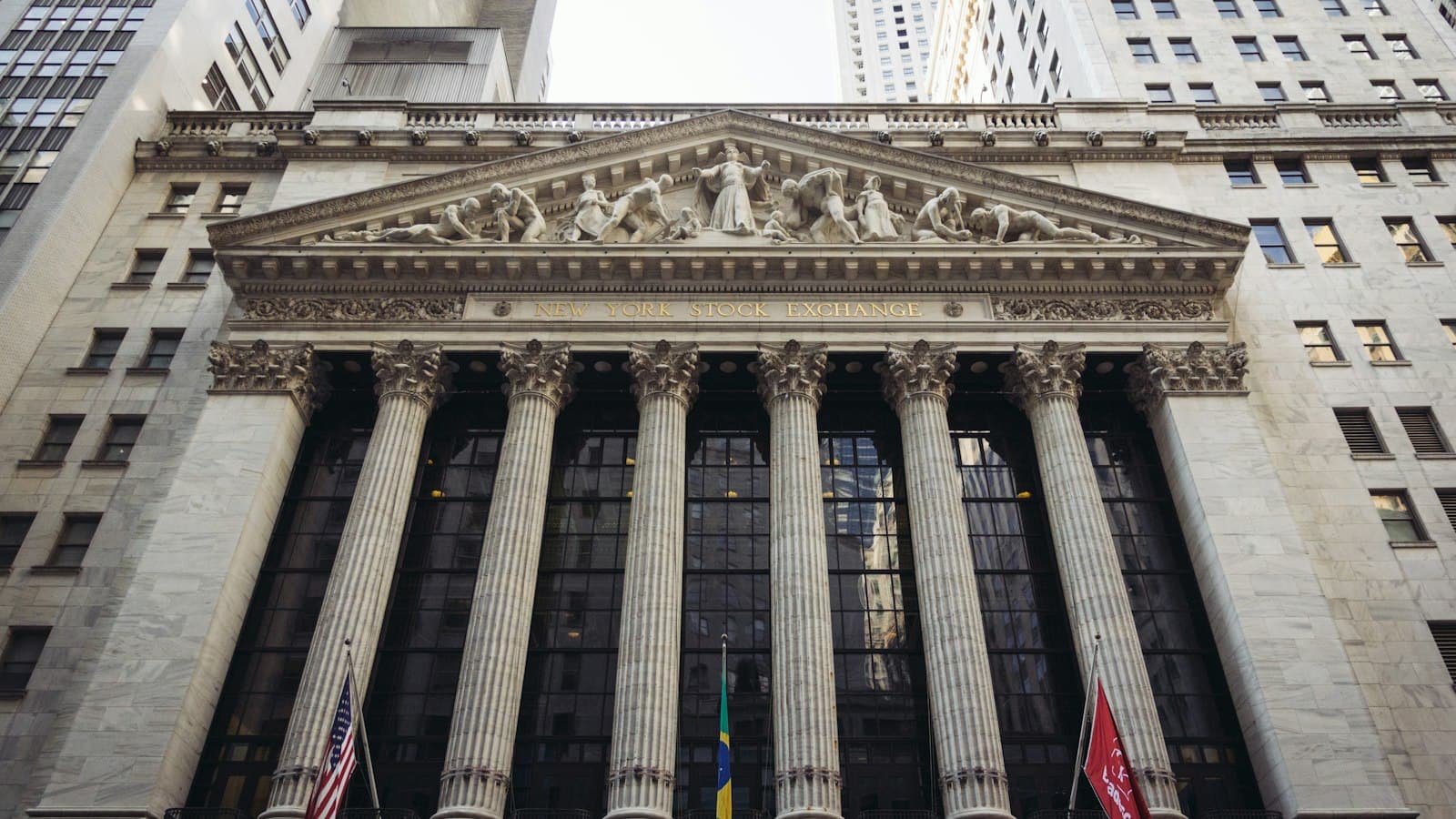
The Nasdaq Composite is an index, a single number that tracks a group of stocks. Tech companies dominate it. On Friday, November 20, the Nasdaq fell 5.28% to 22,617.73. That drop erased its gains for the year. The index lost 10.02% over five sessions, or trading days. It was the Nasdaq's worst week since March 2020.
Investors start Thanksgiving week with an inflation report, which tracks the pace of price rises. Dell's earnings, its report on profits, come out the same week. The Federal Reserve, the US central bank, meets on December 8-9. Futures are contracts that lock in a price for a later date. Traders in these contracts expect the Fed to raise interest rates at that meeting.
 Bar chart of November 20 day changes for major stock indexes in the US, Europe and Asia, with India's Nifty 50 the one gainer
Chip stocks led the fall
Nvidia, the chipmaker, fell 14.01% to close at $125.53 on November 20. Reuters cited two people familiar with the matter. It reported that SEC enforcement staff are reviewing potential accounting issues at the company. The SEC is the US agency that polices stock markets. Reuters said it is unclear when the review began or which accounting matters it covers. The report added that the inquiry does not mean regulators have found any wrongdoing. The SEC declined to comment.
Investors sold across the chip sector. The Philadelphia Semiconductor Index fell 10.73%, and all 30 of its stocks declined. Micron fell 13.86%, and AMD fell 13.26%. Anthropic fell 8.50% on its second day of trading on a stock exchange.
Investors sold across the rest of the US market. The S&P 500, an index of large US companies, fell 3.70% to 6,910.39. It lost 8.61% over five sessions, its worst week since April 2025. The Dow Jones, another index of large US companies, fell 1.93% to 48,147.33. The Russell 2000, which tracks smaller companies, dropped 2.76%. The Dow and the S&P 500 are both in a correction. Traders use that term for a fall of at least 10% from a record high.
 Line chart of the Nasdaq Composite over the past month, ending at 22,617.73 on November 20
The VIX is an index of how much traders expect the S&P 500 to swing. It rose 26.20% to 35.89. That was its highest close since April 2025.
Europe and Asia fell with New York
European investors sold stocks on the same day. The STOXX 600 tracks large companies across Europe. It fell 2.00% on November 20 and 5.80% over five sessions. Germany's main index, the DAX, lost 2.60% on the day and 7.28% over the five sessions. London's FTSE 100 index fell 1.02%, and France's CAC 40 fell 1.89%.
Europe faces high inflation of its own. The eurozone is the group of countries that use the euro. In October, consumer prices there rose 4.0% from a year earlier. That was up from 3.8% in September. The European Central Bank (ECB) sets interest rates for the euro area. On November 26, it publishes the record of its October meeting.
In Asia, Japan's main index, the Nikkei 225, fell 5.06% on November 20. South Korea's KOSPI fell 5.21%. Hong Kong's Hang Seng lost 1.89%, and the Shanghai Composite lost 1.22%. India's Nifty 50 rose 1.12%. It was the one major index in this group that gained.
Investors moved into bonds
Investors bought US government bonds as they sold stocks. A bond is a loan to a government or company that pays interest. A bond's yield is the yearly return a buyer earns at the current price. Bond prices and yields move in opposite directions. Buyers lifted bond prices, and yields fell.
The 10-year yield is the interest rate the US government pays to borrow for 10 years. It fell 14 basis points to 4.912% on November 20. One hundred basis points make one percentage point. Over five sessions, the yield fell 24.2 basis points. TLT is a fund that holds long-term Treasury bonds, the debt the US government issues. It closed with a 1.37% gain.
The dollar gained while yields fell. The US Dollar Index measures the dollar against a basket of major currencies. It rose for a fourth straight week and stood at 103.84. An FXStreet preview tied the gain to bets on a Fed rate rise. Against the Japanese yen, the dollar stood at 158.532. It reversed after it neared 160.00. That pullback came amid concerns about Japanese intervention. Here, intervention means Japan's government buying yen to lift its value.
Oil prices fell with stocks. Brent crude is the global benchmark, the reference price for oil. It fell 2.21% to $89.95 a barrel. WTI, the US benchmark, ended at $83.41. Bitcoin, a digital currency, traded at $60,672 on November 22. That price was 25.38% below its level a month earlier.
Traders expect a Fed rate rise
The Fed sets a target range for its main interest rate. That range is 3.75% to 4.00%. Fed policymakers set it on September 16 with a quarter-point rise. A quarter point is a quarter of one percentage point. The vote was 12-0.
CME FedWatch is a tool that reads rate odds from futures prices. On November 17, it put the chance of another quarter-point rise on December 8-9 at about 95%.
Fed Governor Lisa Cook gave a speech in Chile. She said that "waiting longer to implement rate increases risks getting behind the curve." In that phrase, behind the curve means a late response to rising inflation. If the Fed raises rates, companies and households pay more to borrow. Bonds pay more as a result. Investors compare shares with those better-paying bonds, and shares look more expensive.
The government reports inflation on Wednesday
The government releases October PCE inflation at 8:30 a.m. ET on Wednesday, November 25. PCE stands for personal consumption expenditures. It measures prices across a wide range of household spending. The Fed sets its 2% inflation goal against this index. In September, PCE prices rose 3.6% from a year earlier. Core PCE, which leaves out food and energy, rose 3.1%.
 Big number showing September PCE inflation at 3.6% from a year earlier, against the Fed's 2% goal
Two more reports come out at 8:30 a.m. One is the second estimate of third-quarter GDP, the total output of the US economy. The other is October durable goods orders. These count orders for long-lasting items such as machinery. New home sales follow at 10:00 a.m.
The Fed publishes its Beige Book the same day. It summarizes business conditions that the Fed's 12 regional banks gather from local contacts. Investors get all these reports on the last full trading day before Thanksgiving.
Dell tests AI hardware demand
Dell reports results on Tuesday, November 24, after the stock market closes. The company has a market value, the total worth of its shares, of about $177 billion. It sells servers, the business computers behind online services, built around AI chips. After Nvidia's 14.01% drop, Dell's results are the week's main test of demand for AI hardware. Hewlett Packard Enterprise, another server maker, reports after the close on Monday, November 23.
Autodesk and Workday report alongside Dell on Tuesday evening. Analog Devices and Medtronic report that morning, before the market opens. Deere holds its earnings call at 10 a.m. ET on Wednesday. On that call, company managers discuss the results.
A short week with thin trading
US stock and bond markets close on Thursday, November 26, for Thanksgiving. The New York Stock Exchange (NYSE) reopens on Friday, November 27. It closes at 1:00 p.m. ET that day. The usual close is 4:00 p.m. SIFMA, the bond industry group, recommends a 2:00 p.m. ET close for bonds on Friday. An FXStreet preview warns that Friday liquidity may be thin. Liquidity is the ease with which traders can buy or sell without moving the price.
The Treasury is the US finance department. It sells new 2-year, 5-year and 7-year notes on Monday, Tuesday and Wednesday. Notes are government bonds, and each label gives the note's length in years. At these auctions, investors show how keen they are to lend to the government at current rates.
The week's schedule
- Monday, November 23: US 2-year note auction. S&P Global flash PMIs, early surveys of business activity, for the US, Germany and the eurozone. Agilent and Hewlett Packard Enterprise report after the close.
- Tuesday, November 24: US 5-year note auction. Conference Board consumer confidence, a survey of household mood. Germany's Ifo business survey. Analog Devices and Medtronic report before the open. Dell, Autodesk and Workday report after the close.
- Wednesday, November 25: October PCE inflation, Q3 GDP second estimate and durable goods at 8:30 a.m. ET. New home sales at 10:00 a.m. Fed Beige Book. US 7-year note auction. Deere earnings call at 10 a.m. ET. Australia's October CPI, its consumer price index.
- Thursday, November 26: US stock and bond markets closed. Bank of Korea rate decision. Its base rate, the main policy rate, stands at 3.00%. South Korean inflation was 2.8% in October. ECB accounts, its record of the October meeting. Bank of England Financial Stability Report.
- Friday, November 27: NYSE closes at 1:00 p.m. ET and bonds at 2:00 p.m. ET. Tokyo November CPI, after a 2.8% reading in October. China October industrial profits. German labour market report.
Your portfolio this week
A portfolio is the mix of investments you hold. On November 20, investors moved money across stocks, bonds and currencies in a single day. Holders of chip stocks lost the most. Holders of Treasury bonds gained.
This week, the main scheduled events sit close together. Dell reports on Tuesday evening. The PCE inflation report follows on Wednesday morning, before the holiday. On a thin Friday, a small order can move prices more than usual. If you know these release times, you can tell a price move driven by news from one driven by the calendar.
Sources
- tradingkey.com
- stocktitan.net
- finance.yahoo.com
- 247wallst.com
- fxstreet.com
- bea.gov
- federalreserve.gov
- tradingkey.com
- federalreserve.gov
- fedratecalc.com
- openingbelldailynews.com
- nyse.com
- sifma.org
- econotimes.com
- indexbox.io
- fxstreet.com
Not investment advice.